
Table of Contents
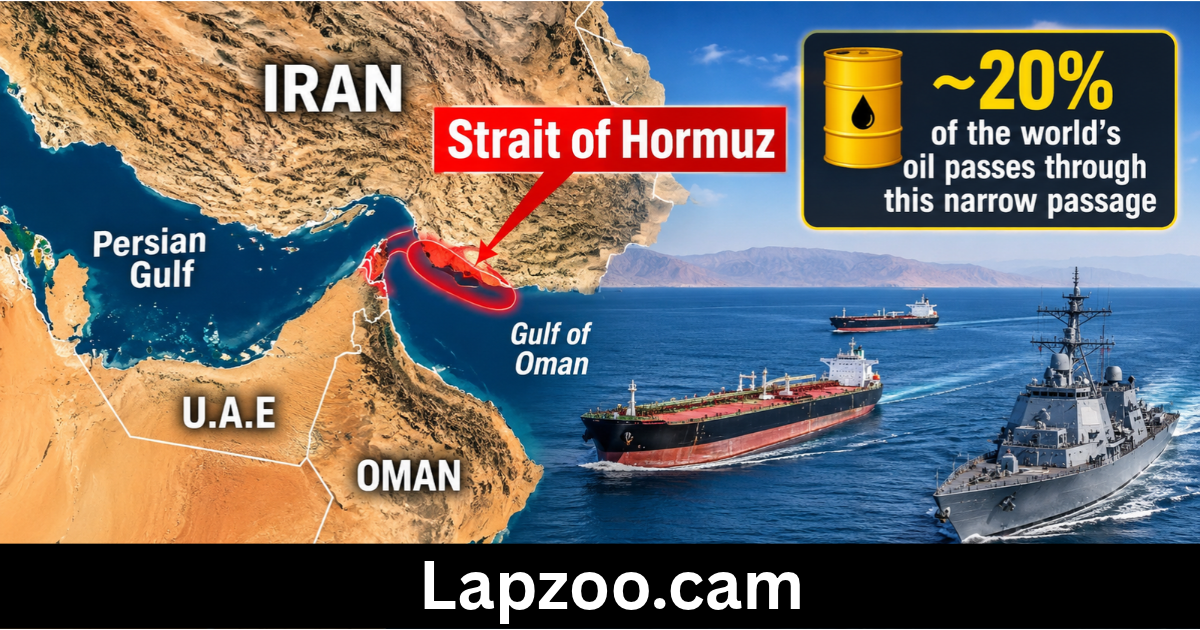
The Strait of Hormuz is one of the most important waterways in the world. Located between Iran and Oman, this narrow passage connects the Persian Gulf with the Gulf of Oman and the Arabian Sea. Strait of Hormuz It plays a major role in international shipping, global energy supplies and the economies of many countries.
The Strait of Hormuz has received significant international attention because of rising regional tensions and disruptions to commercial shipping. As of November 1, 2026, diplomatic discussions are continuing over a possible reopening arrangement, making the waterway an important subject for global news and economic analysis.
Where Is the Strait of Hormuz Located?
The Strait of Hormuz is situated between southern Iran and the Musandam Peninsula, which belongs to Oman. It connects the Persian Gulf to the Gulf of Oman, providing access to the Arabian Sea and international shipping routes.
At its narrowest point, the strait is approximately 21 nautical miles wide. However, the navigable shipping channels are much narrower, making the passage particularly sensitive to maritime security problems.
Several major energy-producing countries depend on this route to transport oil and natural gas to international markets. These include Saudi Arabia, Iraq, Kuwait, Qatar, Bahrain, the United Arab Emirates and Iran.
Why Is the Strait of Hormuz So Important?
The Strait of Hormuz is often described as a global energy chokepoint because a substantial amount of the world’s oil and gas trade passes through it.
1. A Major Route for Global Oil Supplies
According to the International Energy Agency, approximately 20 million barrels of oil per day passed through the Strait of Hormuz in 2025. This represented around 25% of global seaborne oil trade.
Countries in Asia are particularly dependent on these shipments. China, India, Japan and South Korea are among the major destinations for oil transported through the waterway.
Any prolonged disruption can reduce available supplies, increase transportation costs and create uncertainty in international energy markets.
2. Important for Natural Gas Shipments
The strait is also essential for liquefied natural gas (LNG) exports. Qatar is one of the world’s major LNG suppliers, and much of its exported gas travels through this passage.
The IEA estimates that Qatar and the UAE together account for almost 20% of global LNG exports moving through the Strait of Hormuz. Restrictions on shipping can therefore affect electricity generation, industrial production and energy prices in importing countries.
3. A Key Route for International Trade
Oil and gas are not the only products transported through the region. Commercial vessels also carry chemicals, industrial materials and other goods.
Shipping disruptions can create delays, increase insurance premiums and force companies to reconsider their transport arrangements. These effects may eventually reach consumers through higher prices.
Latest Strait of Hormuz News: November 1, 2026
The waterway remains a major focus of international diplomatic and security discussions.
Iran Discusses a Possible Reopening Arrangement
On November 1, 2026, Iran’s Foreign Minister Abbas Araghchi said discussions with Qatari mediators were continuing over a plan that could reopen the Strait of Hormuz within two days, provided that the United States met Tehran’s conditions.
This announcement indicates that diplomatic efforts are ongoing. However, a proposed arrangement should not be confused with a confirmed reopening or a return to normal commercial shipping.
Recent Attacks Raise Maritime Security Concerns
Commercial shipping has faced serious security risks during the regional conflict. On October 30, Reuters reported that a tanker was struck by two limpet mines in the Strait of Hormuz, causing an engine-room fire. The crew was reported safe, and the vessel continued toward its next port.
Other reports from the same period described additional incidents involving commercial vessels. Some claims made by military authorities could not be independently verified, so individual reports should be assessed carefully.
International Efforts to Restore Safe Navigation
The International Maritime Organization (IMO) has called for practical solutions and renewed cooperation to restore freedom of navigation.
The organization has also highlighted the difficult conditions faced by seafarers in the region. Safe passage is important not only for energy markets but also for the crews responsible for operating commercial vessels.
How a Strait of Hormuz Closure Could Affect the World
A major disruption to the Strait of Hormuz could have consequences far beyond the Middle East.
Higher Oil and Fuel Prices
If fewer tankers can leave the Persian Gulf, international buyers may compete for supplies from other regions. This can push crude oil prices higher and affect the cost of petrol, diesel, aviation fuel and other petroleum products.
The actual impact would depend on how long the disruption lasted and how much supply could be replaced.
Pressure on Asian Economies
Many Asian economies rely on energy shipments from Gulf producers. A prolonged interruption could increase import costs for countries that depend heavily on oil and LNG transported through the strait.
Higher energy expenses can also affect manufacturing, transportation, electricity generation and household budgets.
Shipping Delays and Higher Insurance Costs
Shipping companies may face longer routes, increased insurance premiums and additional security expenses. These costs can influence international trade and the prices of imported products.
Businesses that depend on reliable delivery schedules may also experience supply-chain difficulties.
Can Oil Tankers Avoid the Strait of Hormuz?
Some alternatives exist, but they cannot easily replace the entire volume of oil normally transported through the waterway.
Saudi Arabia operates the East-West Pipeline, which carries crude oil toward the Red Sea. The United Arab Emirates also has a pipeline connecting oil facilities to Fujairah on the Gulf of Oman.
According to the IEA, available alternative pipeline capacity is estimated at approximately 3.5 million to 5.5 million barrels per day. This is considerably less than the roughly 20 million barrels per day that passed through the Strait in 2025.
Other countries are exploring alternative infrastructure, but building new pipelines, terminals and transport networks takes considerable time and investment.
The Strategic and Political Importance of the Strait
The Strait of Hormuz is important not only because of energy exports but also because of its geographical and political position. Iran and Oman border the waterway, while Gulf countries depend on safe maritime access to international markets.
Military tensions, diplomatic negotiations and maritime security arrangements can all influence shipping activity. International law also plays an important role in discussions about navigation through straits used for international shipping.
The IMO has emphasized that the right of transit passage through international straits should not be threatened or impaired. Maintaining safe navigation requires cooperation and respect for applicable international rules.
Frequently Asked Questions About the Strait of Hormuz
1. What is the Strait of Hormuz?
The Strait of Hormuz is a narrow waterway connecting the Persian Gulf with the Gulf of Oman and the Arabian Sea. It is one of the world’s most important routes for oil and natural gas transportation.
2. Which countries border the Strait of Hormuz?
Iran lies to the north, while Oman borders the southern side through the Musandam Peninsula. The UAE is also located near the western approaches.
3. Why is the Strait of Hormuz important for oil?
Around 20 million barrels of oil per day passed through the strait in 2025, representing approximately 25% of global seaborne oil trade.
4. What happens if the Strait of Hormuz closes?
A prolonged closure could disrupt oil and LNG supplies, increase shipping costs, raise energy prices and create economic pressure in countries that depend on Gulf exports.
5. Can ships use another route instead?
Some oil can be transported through alternative pipelines in Saudi Arabia and the UAE. However, available capacity is limited and cannot fully replace normal shipping through the strait.
6. Is the Strait of Hormuz open on November 1, 2026?
The situation remains disrupted, with diplomatic discussions underway about a possible reopening arrangement. A proposed agreement does not mean normal commercial shipping has already resumed.
7. Which countries depend most on the Strait of Hormuz?
Major Asian energy importers, including China, India, Japan and South Korea, receive substantial amounts of oil transported through the waterway.
Conclusion
The Strait of Hormuz is a vital international waterway with enormous importance for global energy supplies, shipping and economic stability. Its location makes it essential for oil and LNG exports from several Gulf countries, while its narrow shipping channels create significant security challenges. Strait of Hormuz Recent maritime incidents and diplomatic discussions have brought renewed attention to the region. Whether negotiations lead to safer and more reliable passage will matter to energy markets, shipping companies and consumers worldwide. Understanding the Strait of Hormuz helps explain why developments in this small geographical passage can have consequences across the global economy.