
Table of Contents
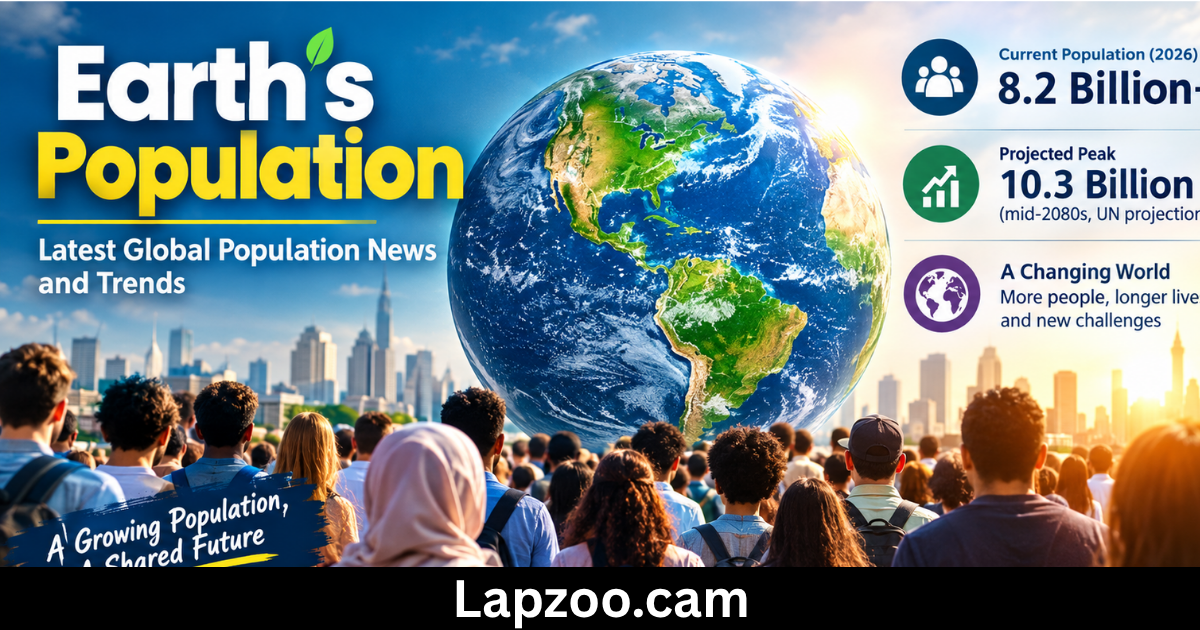
Earth’s population continues to change as birth rates, death rates, life expectancy, and migration reshape the number and distribution of people around the world. In 2026, the global population is estimated at more than 8.2 billion, according to the U.S. Census Bureau’s population estimates.
The latest population data also shows that global growth is slowing. While some regions are still experiencing rapid population increases, others are already seeing population decline because of lower fertility and aging populations.
Earth’s Population in 2026
Current population estimates place Earth’s population at roughly 8.2 billion people in 2026. The U.S. Census Bureau’s World Population Clock estimated the global population at about 8.21 billion in September 2026, while noting that population figures are estimates rather than an exact real-time headcount.
The world crossed the 8-billion milestone in November 2022. According to the United Nations, the population took about 12 years to grow from 7 billion to 8 billion, but the journey from 8 billion to 9 billion is expected to take approximately 15 years. This difference reflects the gradual slowdown in global population growth.
Why Is Earth’s Population Still Growing?
Earth’s population is influenced by three major demographic factors: births, deaths, and migration. Globally, births still exceed deaths, which means the total population continues to increase even though fertility rates have fallen substantially in many countries.
The United Nations reports that global fertility has declined considerably compared with previous generations. In 2024, the global fertility rate was around 2.3 births per woman, and it is projected to move toward approximately 2.1 later in the 2040s.
Another important factor is longer life expectancy. People in many parts of the world are living longer than previous generations. The UN estimates that global life expectancy reached about 73.3 years in 2024 and is projected to rise further in coming decades.
Population Growth Is Uneven Around the World
Although Earth’s population is growing overall, the change is not happening equally everywhere. Some countries have already reached their population peak, while others are expected to continue growing for decades.
The United Nations’ World Population Prospects 2024 estimates that populations in 63 countries and areas had already peaked before 2024. Together, these locations represented about 28% of the world’s population in 2024. Countries in this group include China, Germany, Japan, and Russia.
Meanwhile, countries including India, Indonesia, Nigeria, Pakistan, and the United States are among those expected to continue growing through 2054 under the UN’s medium projection.
Africa’s Growing Population
Africa is expected to account for a significant share of future global population growth. Pew Research Center’s analysis of UN data estimates that Africa’s population could reach about 3.8 billion by 2100 under the UN medium scenario.
The continent also has a relatively young population. This demographic structure means that even as fertility rates decline, population growth can continue because large numbers of young people are entering adulthood and childbearing ages.
When Could Earth’s Population Peak?
The United Nations currently projects that Earth’s population will continue increasing for several more decades before reaching a peak of approximately 10.3 billion people in the mid-2080s. After that point, the global population is projected to gradually decline to around 10.2 billion by 2100.
Population projections are not fixed predictions. They depend heavily on future fertility, mortality, and migration patterns. Changes in these factors can cause future estimates to be revised.
The U.S. Census Bureau has a somewhat different projection. Its 2026 analysis estimates that the global population could reach about 10.6 billion before peaking around 2092.
These differences demonstrate why Earth’s population estimates should be understood as demographic projections rather than exact future outcomes.
What Does a Changing Population Mean?
Population change affects many aspects of society, including housing, healthcare, education, employment, transportation, food demand, and infrastructure. Countries with rapidly growing populations may need to expand schools, hospitals, housing, and employment opportunities.
Countries with aging or shrinking populations face different demographic challenges. A smaller working-age population can increase pressure on pension systems and healthcare services, while businesses may need to adapt to changes in the available workforce and consumer markets.
Population change can also affect cities. As people move toward urban areas, governments need to plan transportation, housing, water supplies, energy systems, and other essential services.
Earth’s Population and the Future
The future of Earth’s population will depend heavily on demographic trends that are already visible today. Falling fertility rates are slowing global growth, while increasing longevity is contributing to population aging.
The UN estimates that by 2080, the number of people aged 65 and older could exceed the number of children under 18 worldwide. This represents a major shift in the age structure of the global population.
At the same time, population growth will remain concentrated in particular regions. Understanding these differences is important because a world of 9 or 10 billion people will not simply contain more people everywhere; some countries may be growing rapidly while others are shrinking.
Frequently Asked Questions About Earth’s Population
1. What is Earth’s population in 2026?
Earth’s population is estimated at more than 8.2 billion people in 2026. The U.S. Census Bureau’s population clock estimated approximately 8.21 billion in September 2026.
2. When did Earth’s population reach 8 billion?
The world’s population reached approximately 8 billion people on November 15, 2022, according to the United Nations.
3. Is Earth’s population still growing?
Yes. Earth’s total population is still growing, but the rate of growth is slowing because fertility rates have declined in many countries.
4. When will Earth’s population reach 9 billion?
The United Nations projects that the world could reach approximately 9 billion people around 2037.
5. When will Earth’s population peak?
The UN’s 2024 projection places the global population peak at approximately 10.3 billion people in the mid-2080s. The U.S. Census Bureau projects a later peak of about 10.6 billion around 2092.
6. Which region is expected to have the most population growth?
Africa is expected to account for a large share of future global population growth. UN-based projections indicate substantial growth across sub-Saharan Africa through the middle and later parts of this century.
7. Why are some countries losing population?
Low fertility, population aging, and migration can contribute to population decline. In countries where deaths consistently exceed births, immigration can sometimes offset part or all of the decline.
Conclusion
Earth’s population has entered a new demographic phase. The global total remains above 8.2 billion in 2026, but population growth is slowing as fertility rates decline and populations age.
Current UN projections suggest that the world population will continue growing for several decades before reaching a peak of roughly 10.3 billion in the mid-2080s. The timing and size of that peak can change as demographic trends develop, making continued population research important for understanding the future of societies around the world.