
Table of Contents
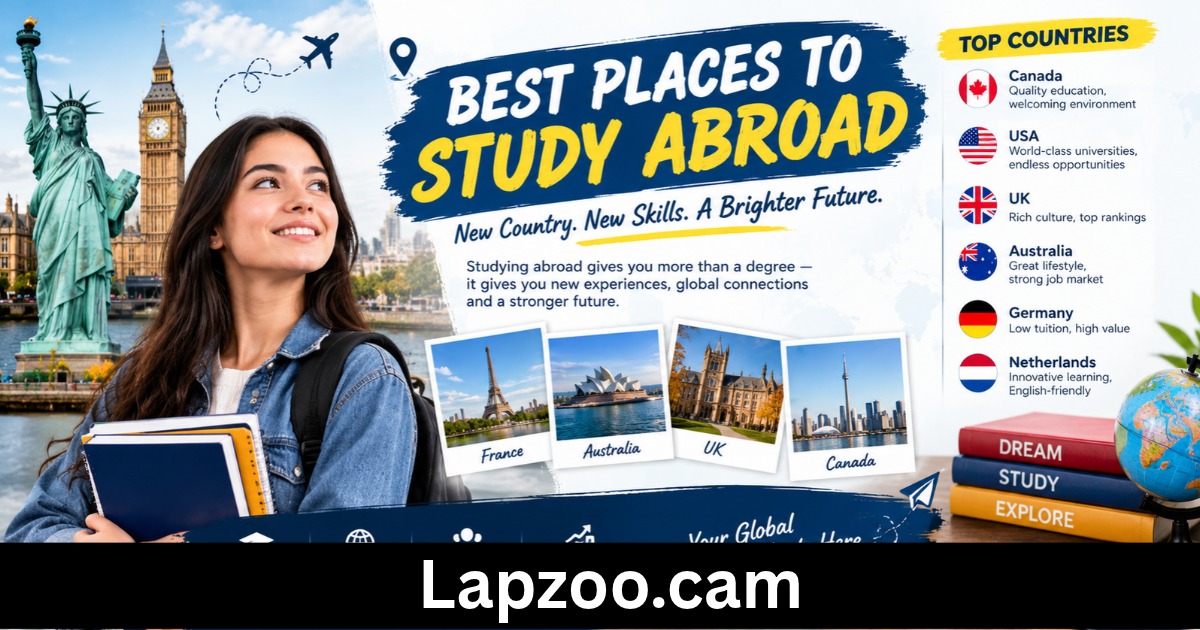
Choosing the best places to study abroad is an important decision for students who want a quality education, international experience, and stronger career opportunities. best places to study abroad Studying in another country can help you explore new cultures, develop independence, improve language skills, and earn a qualification recognized by employers around the world.
However, the right destination depends on more than university rankings. Tuition fees, living expenses, scholarships, language requirements, student visa rules, and employment opportunities all matter. Some countries are attractive for affordable public universities, while others offer a wide range of English-taught programs and established research institutions.
This guide explores popular study-abroad destinations and explains how to choose one that matches your academic goals and budget.
What Makes a Country One of the Best Places to Study Abroad?
The best destination is one that balances educational quality with affordability and personal needs. Before applying, compare several important factors.
Quality of Education
Research universities that offer your preferred subject and check their accreditation, course structure, faculty expertise, research opportunities, and graduate outcomes. A well-matched program may be more valuable than choosing a university based only on its overall ranking.
Tuition Fees and Living Costs
Calculate the total cost of studying abroad, including tuition, accommodation, food, transport, health insurance, books, visa fees, and travel. A country with low tuition may still be expensive if housing and everyday expenses are high.
Student Visa and Work Opportunities
Check the official immigration rules for your chosen destination. Some countries permit eligible international students to work limited hours during their studies or offer temporary residence options after graduation. These rules can change, so never rely on an outdated online guide.
Safety and Student Support
Look into accommodation options, healthcare access, campus security, international student services, and the local community. A welcoming environment and reliable support services can make the transition to another country easier.
7 Best Places to Study Abroad
The following destinations are popular for different reasons. Their suitability depends on your course, finances, language preferences, and long-term plans. <Cite refs={[“turn128046search12″,”turn128046search3”]} />
1. Germany: A Strong Option for Affordable Education
Germany is often considered by students looking for affordable higher education, particularly in engineering, technology, science, and research. Many public universities charge no general tuition for numerous bachelor’s and master’s programs, although semester contributions apply and exceptions exist. Some states and institutions charge tuition to certain international students.
Germany offers programs taught in English, especially at postgraduate level, but many undergraduate courses and local job opportunities require German-language skills. Students should also budget for accommodation, health insurance, transportation, and proof of sufficient living funds for a visa.
Best for: Engineering, computer science, research, and students seeking lower tuition costs.
2. United Kingdom: Globally Recognized Universities
The United Kingdom attracts international students with its established universities, diverse campuses, and broad selection of academic programs. Many master’s degrees can be completed in one year, potentially reducing the time spent paying living expenses compared with longer programs.
Tuition fees vary considerably by university and subject. Students should also account for housing, transportation, visa expenses, and healthcare-related charges where applicable.
The UK has specific student visa requirements and post-study immigration rules. Check current guidance from the official government website before making plans.
Best for: Business, law, humanities, finance, and students interested in shorter postgraduate degrees.
3. Canada: Diverse Campuses and Academic Choices
Canada offers universities and colleges with programs in business, healthcare, technology, science, and other fields. Its multicultural cities and range of educational institutions appeal to students seeking an international campus experience.
International tuition and living costs can be substantial, especially in major cities. Students should also understand Canada’s study permit requirements, any applicable provincial or institutional rules, and current eligibility criteria for post-graduation work permits.
Best for: Technology, research, business, and students looking for a diverse learning environment.
4. Australia: Education and Student Lifestyle
Australia is known for its universities, research programs, and international student communities. English is the primary language of instruction at most universities, making it a practical option for students who want to study in an English-speaking environment.
Tuition and accommodation can be expensive, particularly in major cities. Eligible international students may work within the limits set by their visa, but employment should not be treated as a guaranteed way to pay all study expenses.
Best for: Healthcare, environmental science, engineering, business, and research.
5. United States: Wide Academic and Research Opportunities
The United States offers a broad range of universities, colleges, degree structures, and specialized academic programs. Students may have opportunities to participate in research, internships, student organizations, and interdisciplinary courses.
Costs vary widely. Private universities can be expensive, while some public institutions and scholarship programs may offer more affordable options for eligible students. Admissions requirements, funding availability, and visa rules differ by institution and applicant.
Best for: Computer science, business, engineering, research, and students who want a broad choice of academic programs.
6. Ireland: English-Taught Education in Europe
Ireland is an attractive destination for students interested in technology, business, pharmaceuticals, finance, and other industries. Its English-speaking environment and international university community can make academic and social adjustment easier for many students.
Tuition and accommodation costs should be reviewed carefully, particularly in cities with high housing demand. Students should also verify current immigration requirements and the eligibility rules for any graduate stay-back program.
Best for: Technology, business, finance, pharmaceuticals, and English-language study in Europe.
7. Netherlands: International Programs and Innovation
The Netherlands offers a range of international degree programs, including many courses taught in English. Its universities are known for research and teaching in fields such as engineering, business, social sciences, agriculture, and design.
International students should investigate tuition rates, accommodation availability, health insurance requirements, and the language needed for internships or future employment. Housing can be challenging in some university cities, so planning early is important.
Best for: Business, design, engineering, social sciences, and English-taught European programs.
Best Places to Study Abroad on a Budget
Students with limited budgets should look beyond popular destinations and compare the full cost of a degree. Germany may offer low tuition at many public universities, while Italy and France can provide public university options with fees that vary by institution, program, and student circumstances. Other European and Asian destinations may also be worth researching.
Consider these strategies to manage expenses:
- Search for scholarships offered by universities, governments, and reputable education organizations.
- Compare universities in smaller cities, where accommodation may cost less than in major metropolitan areas.
- Check whether tuition discounts or need-based financial aid are available to international applicants.
- Explore student housing and university accommodation before signing a private rental agreement.
- Prepare a realistic budget that includes emergencies, travel, insurance, and visa costs.
Do not choose a university solely because its tuition is low. Confirm that the institution is recognized, the qualification meets your career requirements, and you can afford the entire program.
How to Choose the Right Study Abroad Destination
With so many countries available, creating a shortlist can make the decision easier. Start with your intended degree, then compare institutions and destinations against your practical needs.
Match the Country to Your Course
Some destinations may be especially suitable for particular subjects because of their universities, research facilities, industries, or professional networks. Review the curriculum and internship opportunities rather than assuming every university in a country offers the same advantages.
Check Scholarships and Admission Requirements
Universities may require academic transcripts, proof of English-language proficiency, recommendation letters, a personal statement, or standardized test results. Requirements vary by program and institution.
Apply early where possible, especially if you need a scholarship or must arrange a student visa. Use official university pages to confirm deadlines and required documents.
Understand Post-Study Options
If you hope to work after graduation, review the current rules for graduate employment and work permits before choosing a destination. A post-study visa is not a guarantee of employment or permanent residence, and eligibility may depend on your qualification, institution, and other conditions.
Consider Your Personal Comfort
Climate, food, cultural expectations, distance from family, language, and access to student support can all affect your experience. Choose a destination where you can manage daily life as well as succeed academically.
Frequently Asked Questions
1. What are the best places to study abroad?
Germany, the United Kingdom, Canada, Australia, the United States, Ireland, and the Netherlands are popular choices. The best option depends on your budget, subject, university preferences, and career goals.
2. Which country is best for studying abroad on a low budget?
Germany is worth considering because many public universities charge little or no general tuition for eligible programs, although exceptions and semester contributions apply. Living expenses and visa financial requirements must still be included in your budget.
3. Which country is best for international students who want to study in English?
The United Kingdom, Ireland, the United States, Australia, and New Zealand offer many English-taught programs. The Netherlands and Germany also have English-language options, particularly at postgraduate level.
4. Can international students work while studying abroad?
Some countries permit international students to work limited hours while studying, subject to visa conditions. Rules differ by country and may change, so check the official immigration website before relying on employment income.
5. How can I get a scholarship to study abroad?
Search university scholarship pages, government-funded programs, and recognized scholarship organizations. Review eligibility requirements, application deadlines, academic criteria, and whether the award covers tuition, living costs, or both.
6. What documents are usually required to study abroad?
Common requirements include academic transcripts, proof of language proficiency, a valid passport, an admission offer, financial evidence, and a student visa application. Some programs also require recommendation letters, portfolios, or standardized tests.
7. When should I start planning to study abroad?
Begin researching approximately 9 to 18 months before your intended start date when possible. This gives you time to compare universities, prepare applications, apply for scholarships, arrange finances, and complete visa requirements.
Conclusion
The best places to study abroad offer more than respected universities. They provide an environment where students can learn, grow personally, explore new cultures, and prepare for future careers. best places to study abroad Germany may appeal to students prioritizing tuition affordability, while the UK offers a wide selection of established universities and shorter postgraduate programs. Canada, Australia, the United States, Ireland, and the Netherlands each provide different academic and lifestyle advantages.